Job Overview
Location: Stratford, Ontario
Structure: Two-story detached house
Problem: Raccoon activity in the attic
Service: Humane raccoon removal and wildlife exclusion
Visits: 2
Summary
Our team completed a two-visit raccoon removal project at a detached home in Stratford after the homeowner reported raccoon activity in the attic. Technician Andrew confirmed the entry point, inspected the attic for young raccoons, installed one-way doors to allow the family to leave safely, and completed comprehensive exclusion work to secure multiple vulnerable areas of the roofline. A follow-up visit confirmed the raccoons had vacated, allowing the one-way doors to be removed and the primary entry point permanently sealed.
Background / Property Context
The homeowner reported noises coming from the attic that were consistent with raccoon activity. During the inspection, our technician identified an active roof entry point and confirmed that young raccoons were present inside the attic. The young raccoons were mature enough to leave naturally with the adult, allowing the removal to proceed using humane one-way door systems.
Customer Concern
The homeowner wanted the raccoons removed without harming the family while preventing future wildlife from accessing the attic through the roof and soffit system.
Inspection & Findings
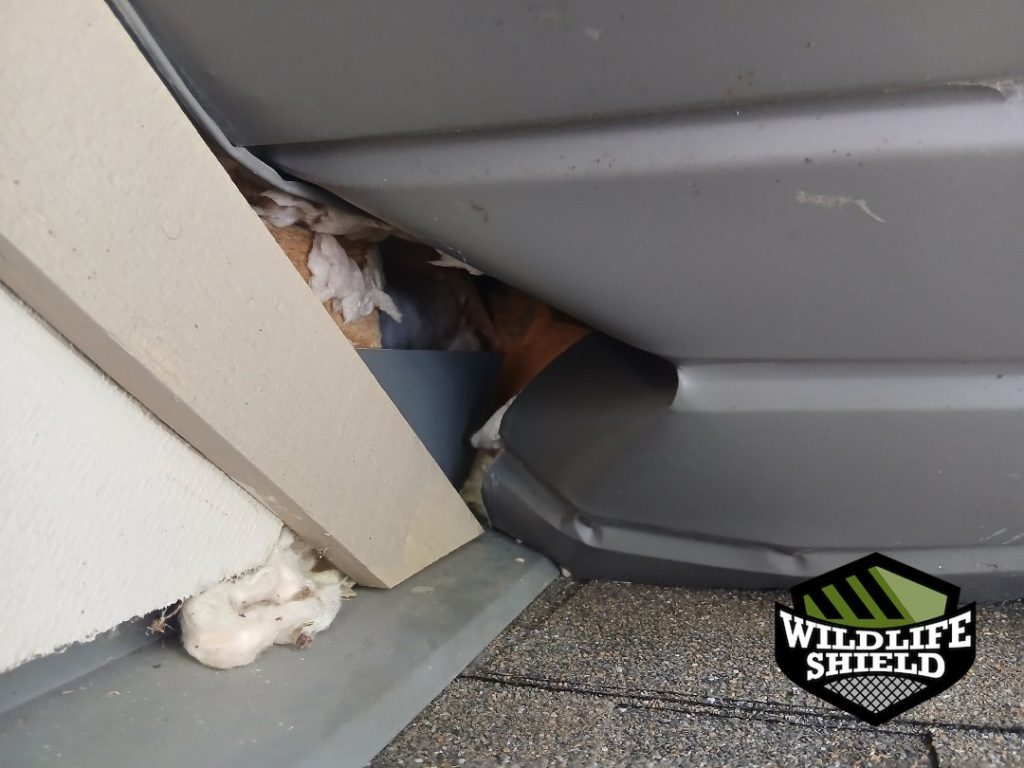
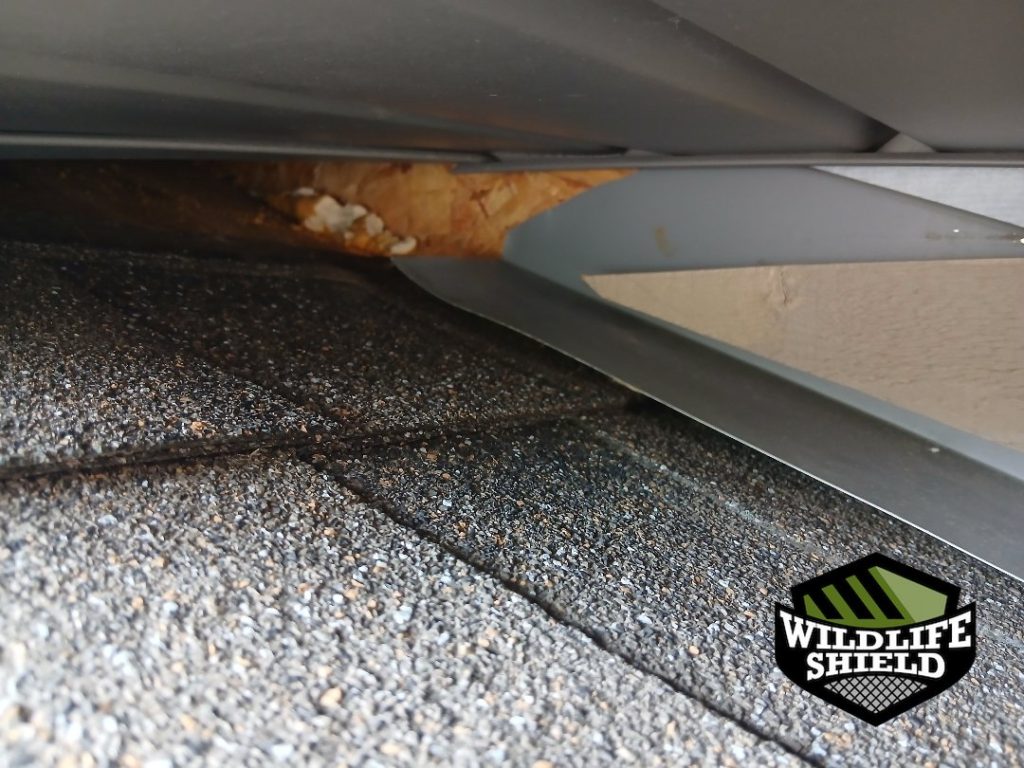
Andrew inspected the roof and attic to determine how the raccoons were entering the home. The primary access point was located along the roofline where construction details provided an opening into the attic. An attic inspection confirmed the presence of mature young raccoons that were capable of exiting alongside the adult.
The photographs show:
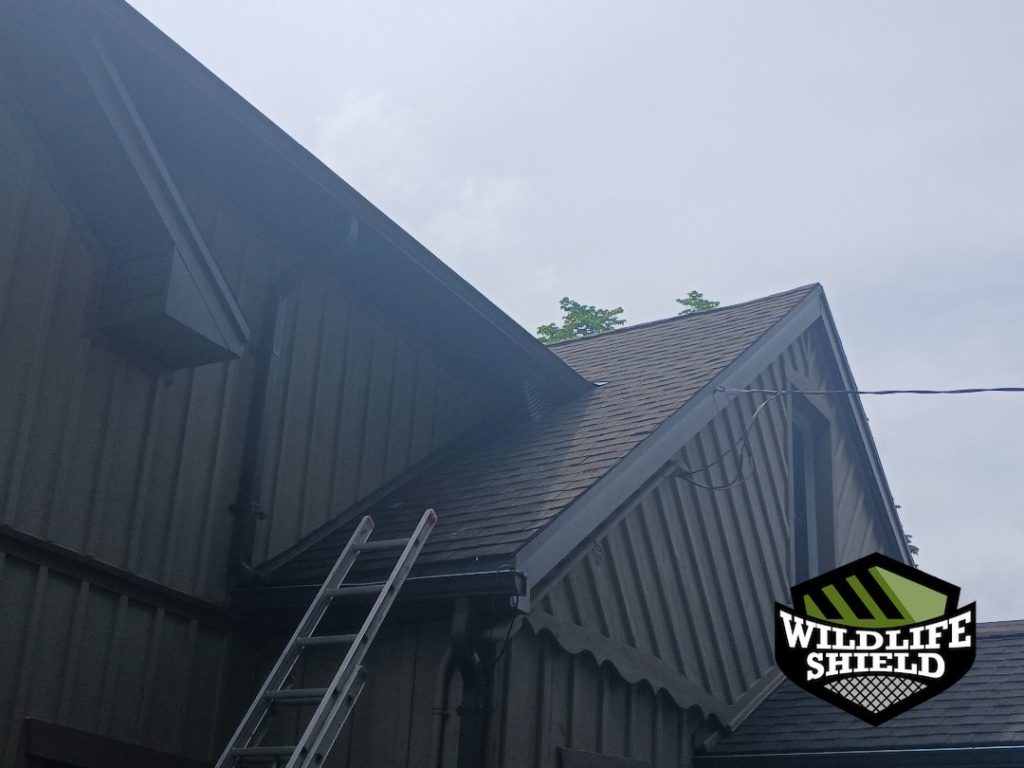
- An exterior overview of the roof where the initial inspection was performed.
- Open gaps along the roofline that could provide wildlife access.
- A plumbing vent protected with galvanized steel mesh.
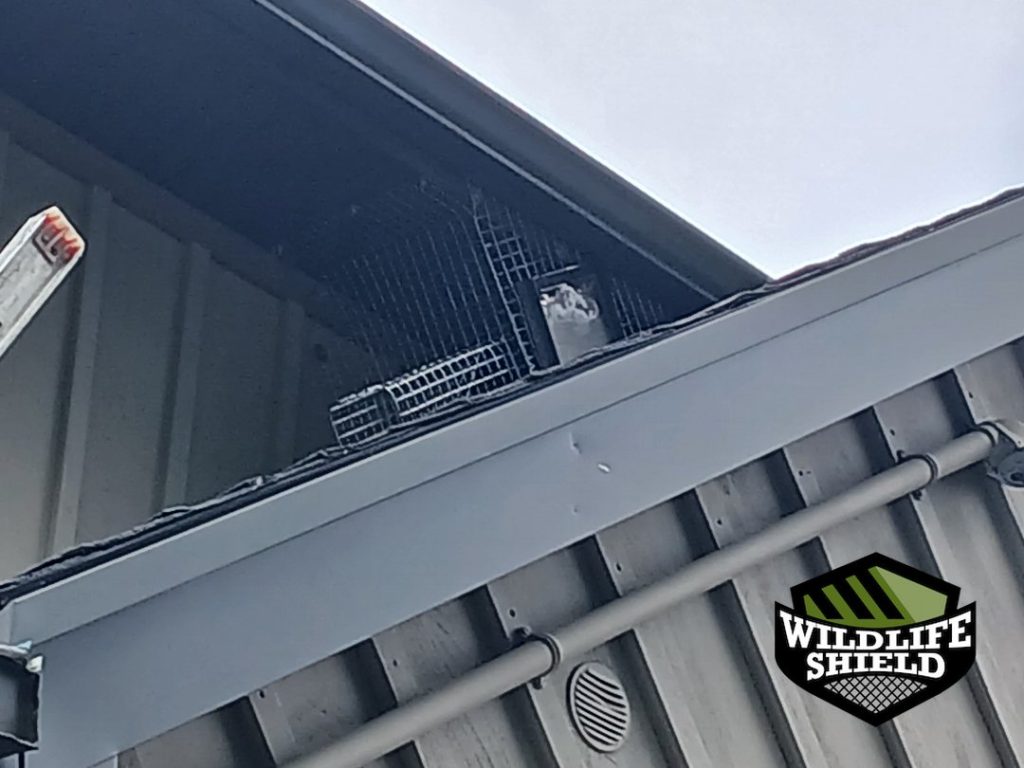
- A one-way door installed at an active soffit entry point.
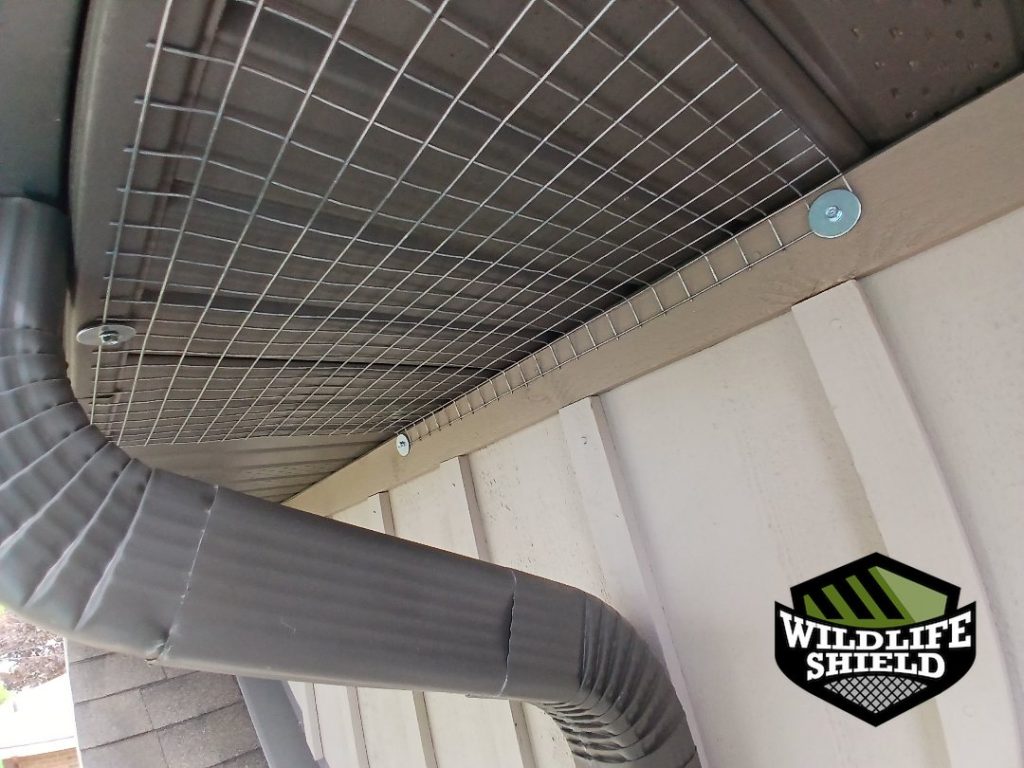
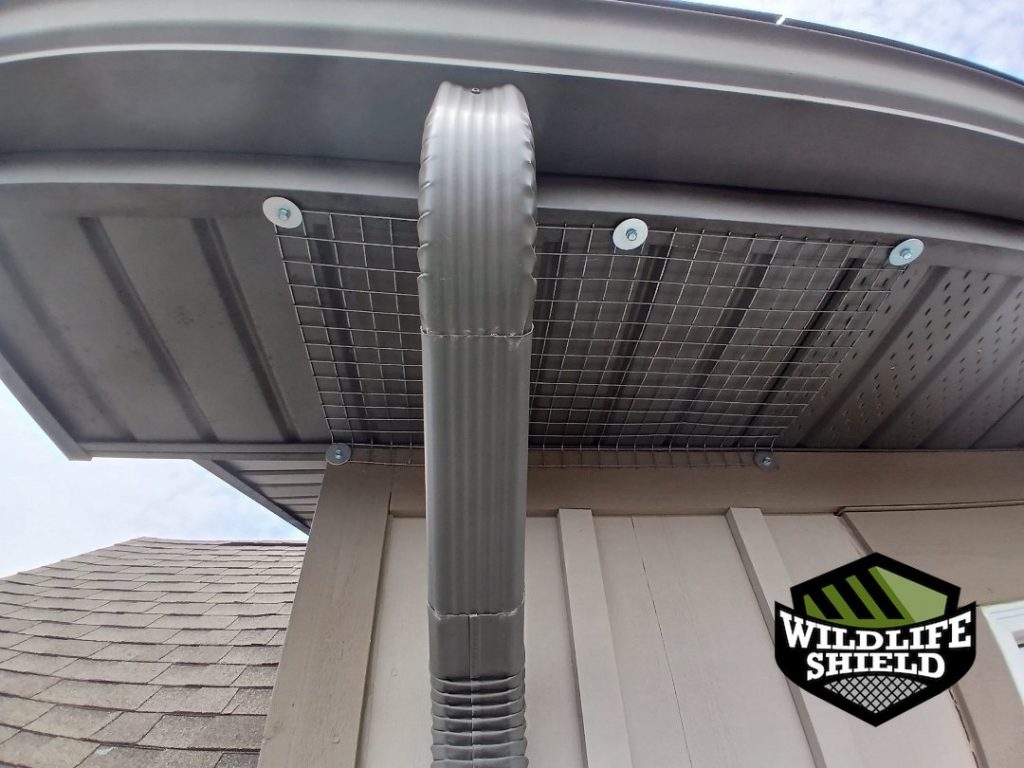
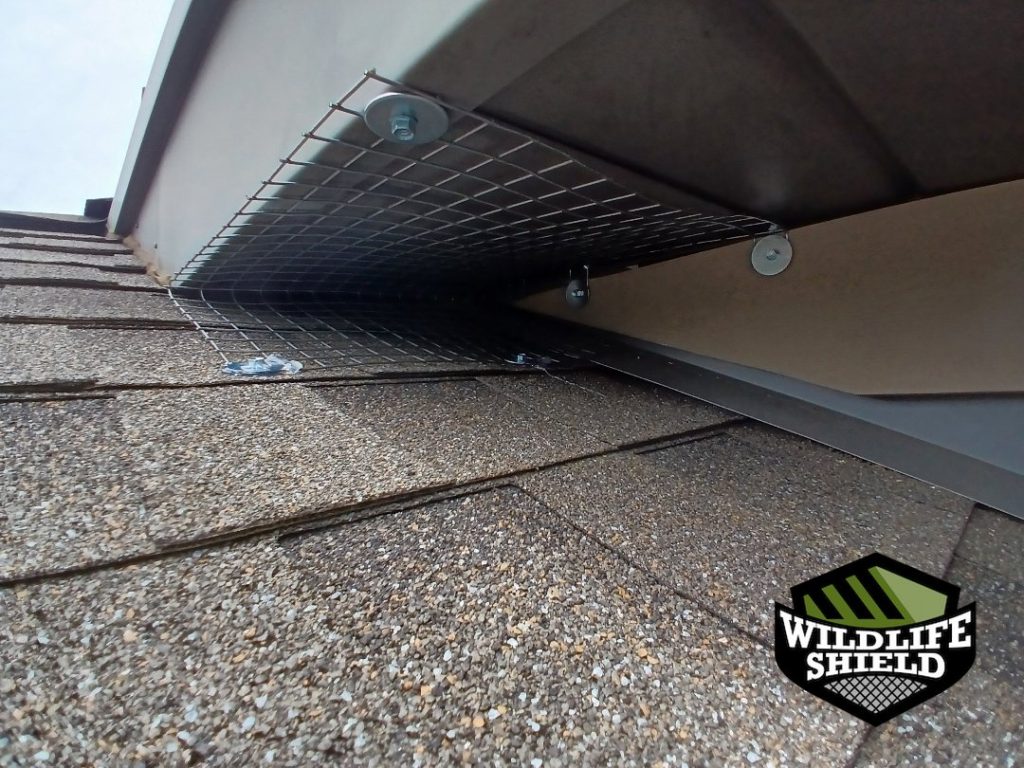
- Galvanized steel mesh installed beneath vulnerable soffit sections.
- Additional screened exclusion protecting extended soffit areas and roofline transitions.
- Completed exclusion work around vulnerable roof features following removal.
Cause Analysis
Raccoons commonly enter attics through roof intersections, soffits, roof vents, and small construction gaps that provide sheltered access. Once an entry point is established, an attic offers a secure environment for raising young. Securing all vulnerable roof openings after humane removal helps reduce the likelihood of future wildlife entry.
Treatment / Removal
During the initial visit, Andrew completed a humane removal process designed to allow the raccoon family to leave naturally.
Work completed included:
- Confirmation of raccoon activity.
- Attic inspection for young raccoons.
- Installation of a one-way door for the adult raccoon.
- Installation of a second one-way door to allow the mature young raccoons to exit safely.
- Installation of a galvanized steel cage over one roof vent.
- Protection of two plumbing vents with galvanized steel mesh.
- Securing four soffit areas vulnerable to wildlife access using galvanized steel mesh.
- Sealing two siding gaps with galvanized steel mesh.
Exclusion & Repairs
After the exclusion period, our team returned to verify that all raccoons had successfully left the attic.
The one-way doors were removed, the primary entry point was permanently sealed, and all previously installed galvanized steel exclusion remained in place. The completed work strengthened several common wildlife entry points around the roofline while maintaining normal ventilation.
Outcome & Confirmation
During the final visit, the homeowner reported no further noises or raccoon activity. Our inspection confirmed the one-way doors could be removed safely, all exclusion work remained secure, and no additional wildlife activity was observed.
Technician Notes
Andrew confirmed an active raccoon entry point and determined that the young raccoons inside the attic were mature enough to leave naturally with the adult. Two one-way doors were installed to facilitate humane removal before completing permanent exclusion. The follow-up inspection confirmed successful removal, the one-way doors were removed, all exclusion work was inspected, and no further raccoon activity was reported.